Confirm the pain generator
The surgeon reviews imaging, symptoms, neurologic findings, treatment history, and patient goals before recommending surgery.
Lumbar disc decompression is a minimally invasive spine procedure that relieves pressure on lumbar nerves caused by a herniated disc, bone spur, or thickened ligament. At Pathway, care is reviewed by a fellowship-trained spine neurosurgeon and coordinated from consultation through recovery.
Lumbar decompression is most often discussed when imaging and symptoms point to a compressed nerve root. Patients may describe pain travelling from the low back into the buttock, thigh, calf, or foot, sometimes with numbness, tingling, or weakness.
A consultation focuses on matching the symptoms to the imaging and confirming that surgery is likely to address the source of nerve compression.
The specific technique varies by anatomy and diagnosis. The goal is to create space around the affected nerve so symptoms have a chance to improve.
The surgeon reviews imaging, symptoms, neurologic findings, treatment history, and patient goals before recommending surgery.
Through a minimally invasive approach where appropriate, the surgeon removes the disc, bone, or ligament tissue pressing on the nerve.
Walking usually begins early, while bending, lifting, work demands, and sport are advanced according to the surgeon's instructions.
Many patients are discharged the same day and begin walking early. Relief of leg pain can be rapid, but nerve recovery, back soreness, conditioning, and return to work vary.
Your surgeon will provide restrictions based on the exact procedure, your symptoms, and your physical demands.
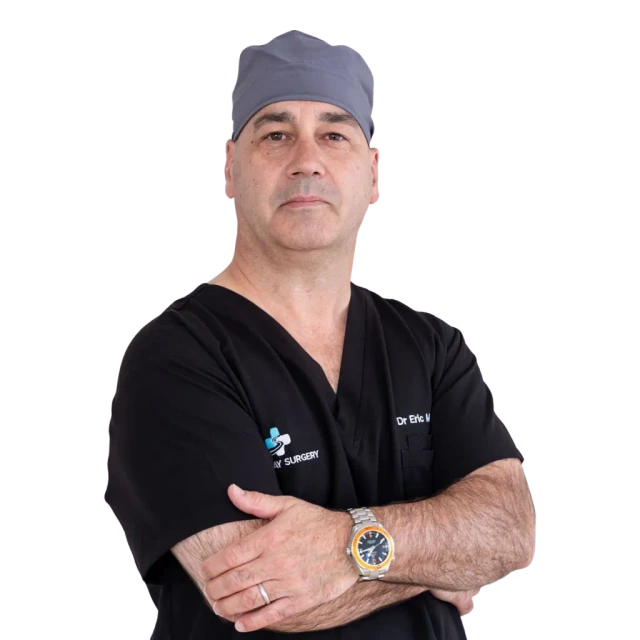
Dr. Eric Massicotte is a minimally invasive spine neurosurgeon and Associate Professor at the University of Toronto. Pathway's spine pathway connects patients with specialist review and coordinated surgical planning.
Speak with a patient liaison about your situation. No referral is required, and consultations are typically scheduled within 1-4 business days.