Spine · Cervical

Anterior cervical discectomy & fusion

ACDF (anterior cervical discectomy and fusion) is a procedure for cervical disc herniation, bone spurs, and cervical instability, performed through the front of the neck with removal of the damaged disc and fusion of the segment. Consultations with our fellowship-trained neurosurgeon in 1–3 days, with surgery typically 2–4 weeks later. Most patients are discharged after one night, with a soft collar for the first few weeks; return to desk work is typically 2–4 weeks, and full fusion takes 3–6 months.

  • Most patients home after one night
  • Anterior (front-of-neck) approach
  • Surgery in 2–4 weeks
  • No referral required
Physiotherapist guiding an older patient through rehabilitation exercises
5.0 from 250+ reviews
Anterior approach
1–3 days
to first consultation
2–4 weeks
from consult to surgery
Same day
or next-day discharge for most patients
3–6 months
typical time to full fusion
Patient stories

Recovery, in their words.

5.0 from 250+ patient reviews

I had ACDF surgery with Dr. Eric Massicotte. The team at Pathway are incredible, and they ensure that all aspects of your health journey are taken care of to the finest detail. They put my mind at ease and brought me to a place where my life doesn’t revolve around pain. I highly recommend Pathway Surgery for anyone who is in pain and needs help.

Donna Dunham

ACDF surgery (C4–C7)

My experience with Pathways Surgery was very positive. I suffered with pain in my neck, shoulder, arms and fingers and had no quality of life. Dr. Massicotte requested an MRI and discussed my options in clear no pressure terms. The surgery and convalescence went extremely well and I am feeling better every day. Dr. Massicotte has checked on my progress and kept communication open.

Rosy Winter

Neck, shoulder & arm pain

The procedure

What is ACDF?

A minimally invasive ACDF is performed to relieve pressure on nerves or the spinal cord in the neck caused by disc herniation, arthritis, or spinal instability. The procedure is performed from the front of the neck, allowing the surgeon to access the cervical spine without disturbing the muscles of the back.

After removing the damaged disc, a spacer or cage filled with bone graft is placed into the disc space to restore height and alignment. The bones fuse together over time, creating a stable segment.

Common indications

Surgical technique

The procedure, step by step.

An anterior approach reaches the cervical spine without disturbing the muscles of the back.

  1. 1

    Anterior approach

    A small incision is made at the front of the neck

  2. 2

    Tissue mobilization

    Muscles, airway, and blood vessels are carefully moved aside to access the cervical spine

  3. 3

    Discectomy

    The damaged disc is removed, decompressing the nerves or spinal cord

  4. 4

    Spacer placement

    A spacer or cage with bone graft is placed to restore disc height and alignment

  5. 5

    Stabilization

    A small plate and screws may be used to stabilize the spine while the bones fuse

Your surgeon

Our spine specialist.

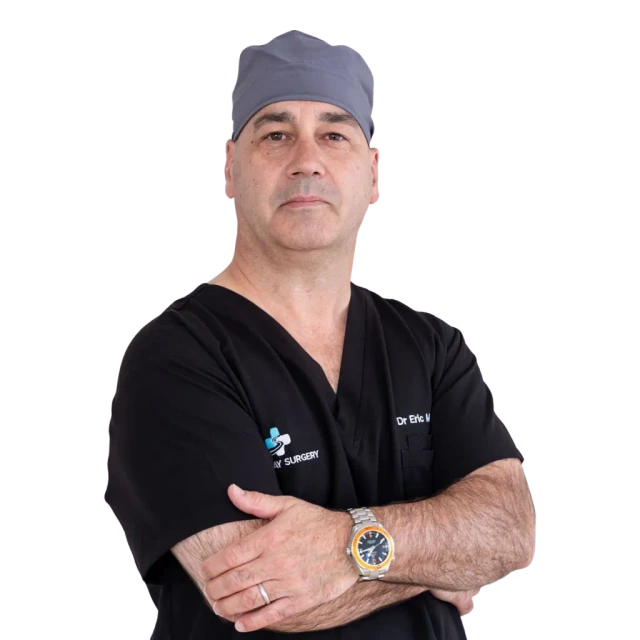
Fellowship-trained neurosurgeon with expertise in cervical spine surgery.

FAQ

Frequently asked questions.

ACDF is commonly used to treat cervical disc herniation, cervical radiculopathy (arm pain from a pinched nerve), cervical spinal stenosis, cervical myelopathy (spinal cord compression), and degenerative disc disease in the neck.

Some patients experience temporary soreness or difficulty swallowing for a few days to weeks after surgery due to the approach through the front of the neck. This is usually mild and resolves on its own. Starting with soft foods and gradually progressing helps most patients.

Most patients go home the same day or after one night. Light activities can typically resume within 2-4 weeks. A soft collar may be recommended for comfort. Full fusion takes 3-6 months, during which you should avoid heavy lifting and high-impact activities. Many patients return to desk work within 2-4 weeks.

A single-level ACDF typically results in minimal loss of overall neck mobility—most patients cannot tell the difference. The other cervical segments continue to move normally and often compensate well. Multi-level fusions may have a more noticeable impact.

No referral is required. You can book a consultation directly with our spine specialist. Having a recent MRI of your cervical spine is helpful but not mandatory—we can arrange imaging if needed.

Next step

Start your care journey.

Schedule a consultation to discuss your treatment options with our spine specialist. No referral required.

Related links

Continue your research.