Q&A guide
Bunions & big toe arthritis
Minimally invasive techniques, when surgery is needed, and what to expect during recovery.
Full Q&A guideMinimally invasive foot & ankle care
Bunion correction through small incisions, with specialist care from Dr. Danny Arora. Understand the procedure, plan for recovery and discuss whether it’s right for you.
5.0 from 250+ Pathway patient reviews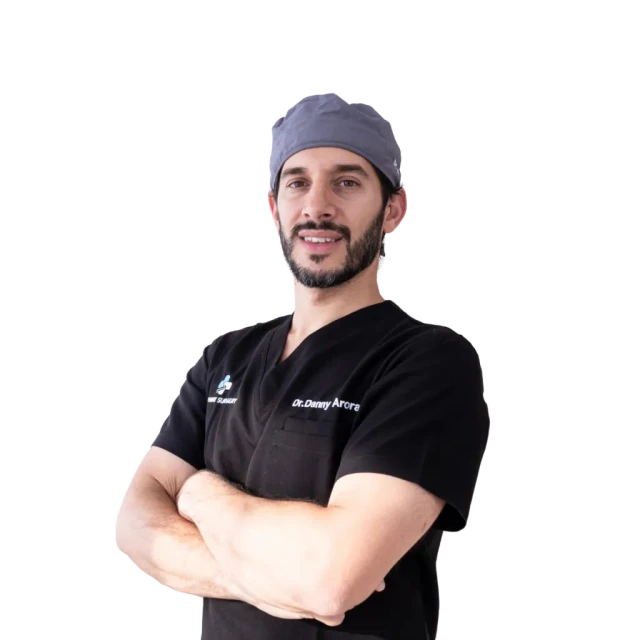
Foot & ankle surgery
Duke University fellowship trained
5.0 from 250+ patient reviews
A bunion (hallux valgus) is a bony bump that forms at the base of the big toe when the first metatarsal bone shifts outward and the big toe angles toward the smaller toes. This misalignment can cause pain, swelling, and difficulty wearing shoes.
Minimally invasive bunion surgery corrects this deformity through very small incisions — typically less than 1cm — rather than the larger incisions used in traditional open surgery. Using specialized instruments and imaging guidance, the surgeon reshapes and repositions the bones to restore proper alignment.
The minimally invasive approach aims to achieve the same correction as traditional surgery while potentially offering less postoperative pain, smaller scars, and faster return to activity.
Watch Dr. Arora explain minimally invasive bunion surgery, what causes bunions, and the recovery process.
Minimally invasive techniques, when surgery is needed, and what to expect during recovery.
Full Q&A guideAnimation showing how the bones are reshaped and realigned through small incisions.
Full Q&A guideSpecialized instrumentation designed for precise minimally invasive bunion correction.
Tiny incisions (typically under 1cm) minimize soft tissue disruption
Real-time imaging confirms accurate bone correction
Specialized tools reshape bone through tiny portals
Internal fixation maintains correction during healing
For a fuller discussion of the tradeoffs and decision factors, read is bunion surgery worth it?
Both techniques can achieve excellent results — your surgeon will recommend the best approach for your specific case. Technology information regarding the Stryker PROstep system is provided by Stryker Corporation, the manufacturer.
Day 1
1Day 1
Walking in a surgical shoe
Weeks 1–2
2Weeks 1–2
Limited walking, elevation, wound care
Weeks 4–6
3Weeks 4–6
Transition to wide, supportive shoes
Weeks 6–8
4Weeks 6–8
Return to most daily activities
1–2 weeks
Early healing
Limited walking with elevation and wound care
4–6 weeks
Regular footwear
Wide, supportive shoes as comfort allows
3–4 months
High-impact activities
Gradual return as healing allows
Keep your foot elevated, wear your surgical shoe as directed, and attend follow-up visits for X-rays and wound checks. Swelling can persist for several months — this is normal.
Fellowship-trained surgeon with expertise in minimally invasive foot surgery.
Not everyone is a candidate. The minimally invasive approach is typically best suited for mild to moderate bunion deformities. Severe bunions, significant arthritis, or complex deformities may require traditional open surgery for optimal correction. Your surgeon will evaluate your specific case and recommend the best approach.
Yes, most patients can walk immediately after surgery in a special surgical shoe. However, you should limit walking to essential activities only for the first 1-2 weeks to allow initial healing to begin.
Recurrence rates after proper bunion surgery are low. However, factors such as genetics, footwear choices, and activity level can influence long-term results. Following your surgeon's post-operative instructions and wearing appropriate footwear helps minimize the risk of recurrence.
A referral is not typically required to book a consultation with our team. You can contact us directly to discuss your bunion and explore potential correction options. We generally recommend bringing any recent X-rays or relevant medical records to your appointment if available.
The PROstep technique utilizes small, high-strength screws to secure the bone in its new, corrected position. These screws are designed to stay in place long-term and typically do not need to be removed unless they cause irritation.
While every patient's experience is different, the minimally invasive approach is designed to be less traumatic to the surrounding skin and soft tissue. Many patients report requiring less pain medication and experiencing less swelling compared to traditional open bunion surgery.
Schedule a consultation to discuss your bunion and explore whether minimally invasive surgery is right for you. No referral required.
