Foot & ankle · Joint preservation

Ankle cartilage restoration in Canada

Ankle cartilage restoration uses the Arthrex BioCartilage® biologic kit to create a scaffold for new tissue growth in localized talar dome cartilage defects — a joint-preserving approach intended to delay or avoid ankle fusion or replacement. Consultations with our fellowship-trained foot and ankle surgeons in 1–3 days, with surgery typically 2–4 weeks later. Initial non-weight-bearing is typical, with progressive loading through 8–12 weeks and a gradual return to running over the following months as the scaffold integrates.

  • Joint-preserving biologic approach
  • Intended to delay or avoid fusion or replacement
  • Surgery in 2–4 weeks
  • No referral required
Physiotherapist guiding a patient through a lunge exercise
5.0 from 250+ reviews
Joint-preserving option
1–3 days
to first consultation
2–4 weeks
from consult to surgery
8–12 weeks
progressive loading, typical
6+ months
gradual return to impact sport
The procedure

What is ankle cartilage restoration?

Cartilage is the smooth, wear-resistant tissue that covers the bone ends in your ankle joint. Unlike other tissues, cartilage has a limited ability to heal itself. When localized defects occur — often called osteochondral lesions of the talus (OLTs) — they can cause pain, swelling, and a “catching” sensation in the ankle.

Cartilage restoration is a joint preservation procedure aimed at repairing these specific defects. Rather than replacing the entire joint, the surgeon uses biologic materials to fill the gap, providing a structural environment that helps the body grow new, healthy cartilage-like tissue.

Key goals of biologic restoration

By addressing cartilage damage early with advanced biologics, the aim is to support an active lifestyle and maintain natural joint anatomy.

Advanced biologics

Arthrex BioCartilage® technology.

Providing a biologic scaffold to enhance the quality of cartilage repair.

Arthrex BioCartilage Biological Scaffold

BioCartilage® biologic scaffold mixing & delivery system

Technology by Arthrex

A scaffold for recovery

The Arthrex BioCartilage® kit is a biologic advancement used most commonly on the talus bone. It consists of dehydrated cartilage extracellular matrix that contains the native components of healthy cartilage.

  1. 1

    Defect preparation

    Damaged tissue is removed and the bone is stimulated (microfracture) to release healing cells

  2. 2

    Biologic customization

    BioCartilage is mixed with the patient’s own blood or bone marrow concentrate (biologic cells)

  3. 3

    Direct application

    The biologic mixture is applied directly into the cartilage defect to serve as a repair scaffold

  4. 4

    Secure sealing

    A biocompatible sealant is applied over the mixture to help secure the repair in place during initial healing

Technology information regarding the BioCartilage® biologic kit is provided by Arthrex, Inc., the manufacturer. Individual results may vary — please consult with your surgeon to determine if you are a candidate for cartilage restoration.

Surgical approach

Restoring the talar dome.

Ankle cartilage defects most commonly occur on the talus bone (the “talar dome”). These defects can cause significant mechanical symptoms and, if left untreated, often lead to global ankle arthritis.

  • Healing stimulusMicrofracture creates tiny channels in the bone to release mesenchymal stem cells
  • Biologic mixtureBioCartilage is enriched with your own biological factors to catalyze healing
  • Precision fillingThe defect is meticulously filled to restore a smooth joint surface

Patient journey

  1. 1

    Planning & imaging

    High-resolution MRI determines the exact size and location of the defect

  2. 2

    Day of surgery

    Biologic application typically performed arthroscopically or through minimal open access

  3. 3

    Protection phase (weeks 1–6)

    Non-weight bearing is essential to allow the biologic scaffold to consolidate

  4. 4

    Activation phase (weeks 6–12)

    Progressive weight-bearing and specialized physical therapy to stimulate cartilage growth

  5. 5

    Return to activity (6+ months)

    Gradual return to impact sports as indicated by follow-up imaging and clinical assessment

Your surgeon

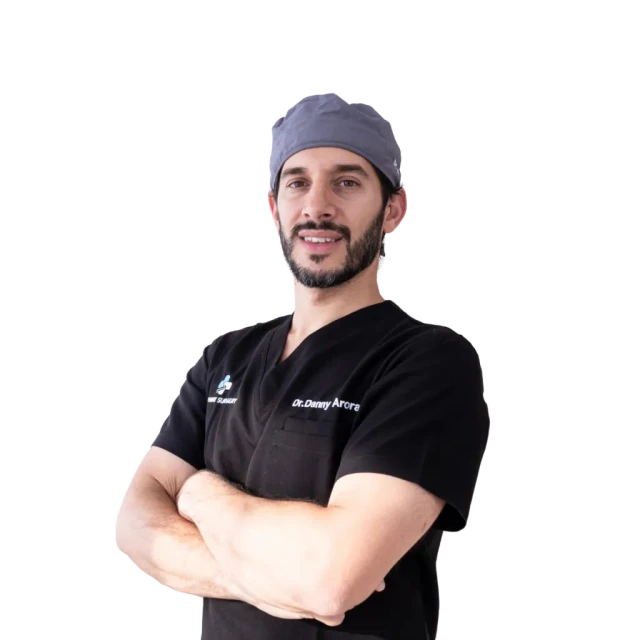
Our cartilage restoration specialist.

Fellowship-trained surgeon expert in advanced biologics and joint preservation.

FAQ

Frequently asked questions.

BioCartilage is a biologic scaffold made from allograft (donor) cartilage extracellular matrix. It contains the proteins and factors found in natural cartilage. Once applied, it works with your body's cells to help grow new cartilage-like tissue (fibrocartilage or hyaline-like cartilage) within the defect.

Driving depends on which foot was operated on and your surgeon's specific weight-bearing restrictions. If it was your right foot, you will likely be unable to drive for at least 6 weeks while non-weight-bearing. Your surgeon will give you clearance based on your specific recovery timeline.

For many patients, successful cartilage restoration can significantly delay the onset of global joint arthritis and the need for future joint replacement. The primary goal is joint preservation—keeping your natural joint functional and pain-free for as long as possible.

No referral is required. You can book a consultation directly with our team to discuss your joint preservation options. Having recent imaging (MRI or Weight-bearing X-rays) is highly recommended for evaluation.

Standard microfracture surgery creates a blood clot that heals as fibrocartilage, which is generally not as durable as the original cartilage. BioCartilage provides a scaffold of actual cartilage proteins, which is intended to help the body produce a higher-quality, more durable repair tissue within the defect.

Low-impact activities like swimming and cycling can usually begin after 8-12 weeks. Returning to high-impact sports (running, soccer, basketball) typically requires a gradual progression over 6 to 9 months. This timeline is designed to ensure the new tissue is strong enough to handle sport-specific loads.

Next step

Start your care journey.

Schedule a consultation to discuss your joint preservation options and see if cartilage restoration is right for you. No referral required.

Related links

Continue your research.