Foot & ankle · Sports medicine

Achilles tendon repair in Canada

Minimally invasive Achilles tendon repair uses the Arthrex PARS® Jig for percutaneous tendon approximation and the SpeedBridge™ system for secure bone-anchored fixation in select cases — an approach designed to preserve tendon blood supply through smaller incisions. Consultations with our fellowship-trained foot and ankle surgeons in 1–3 days, with surgery typically 2–4 weeks later. Early protected weight-bearing in a boot is typical, with return to running around 3–4 months and return to pivoting sport at 6–9 months.

At Pathway, our fellowship-trained foot and ankle surgeons perform achilles tendon repair. Consultations are available in 1–3 days, with surgery typically 2–4 weeks later.

  • Minimally invasive PARS® technique
  • Early protected weight-bearing in a boot
  • Surgery in 2–4 weeks
  • No referral required
Patient walking confidently on a coastal trail after foot and ankle recovery
5.0 from 250+ reviews
Minimally invasive repair

At a glance

Achilles tendon repair at a glance

Minimally invasive Achilles tendon repair uses the Arthrex PARS® Jig for percutaneous tendon approximation and the SpeedBridge™ system for secure bone-anchored fixation in select cases — an approach designed to preserve tendon blood supply through smaller incisions.

1–3 days
to first consultation
2–4 weeks
from consult to surgery
3–4 months
typical return to running
6–9 months
typical return to pivoting sport
Patient stories

Recovery, in their words.

5.0 from 250+ patient reviews

After tearing my Achilles, the public system shunned me from surgery, stating ‘you’re not an athlete.’ As a pilot and father to a 3-year-old, I knew I needed my feet to fly and play with my son. I found Pathway and everything changed. Joe arranged everything, and Dr. Arora — a highly trained, compassionate surgeon — reassured me I would fly again. Surgery in Montreal went perfectly with amazing pain management. Pathway is truly the only alternative to a flawed system.

Leelan Marasinghe

Professional pilot · Achilles repair

The procedure

What is the PARS® technique?

A PARS® (Percutaneous Achilles Repair System) repair is a minimally invasive technique used to repair a ruptured Achilles tendon while significantly limiting soft-tissue disruption compared to traditional “open” surgery.

The goal is to combine the strength of an open repair with the biological benefits of a percutaneous (through the skin) approach. By keeping the “biological envelope” intact, the tendon is supported during the healing process.

Surgical technique

The PARS® difference.

Our surgeons repair the rupture through a small incision while the PARS jig guides each suture pass — limiting trauma to the tissues that bring blood flow and healing factors to the tendon.

  1. 1

    Small incision

    The surgeon makes a small horizontal incision over the rupture site, preserving the surrounding skin and blood supply.

  2. 2

    PARS jig guidance

    The PARS jig is inserted into the tendon sheath to guide high-strength sutures through the torn ends in a precise, controlled pattern.

  3. 3

    Direct re-approximation

    The sutures bring the tendon ends back together, restoring proper tension and alignment without fully opening the ankle.

Arthrex PARS Achilles Jig System

Technique: Arthrex PARS® Minimally Invasive System

Surgical technology

Supporting your recovery.

Combining the strength of an open repair with the biological benefits of a percutaneous approach.

SpeedBridge™ technology

Often combined with PARS, the Achilles SpeedBridge™ uses high-strength FiberTape® and SwiveLock® anchors to secure the tendon directly to the heel bone.

  • No knots required (knotless)
  • Greater compression and tendon contact
  • Early range of motion
  • Structural footprint stability

Technology by Arthrex

Biological healing

By avoiding large incisions, we preserve the paratenon — the specialized tissue that brings blood flow and healing factors to the tendon.

Reduced scarring

The small incision results in less internal scar tissue, which can improve the overall glide and function of the tendon post-recovery.

Sports performance

Precision suture placement is designed to repair the tendon at the optimal length to restore “push-off” power for athletes.

Refined approach

Minimally invasive approaches are designed for smaller incisions compared to traditional open surgery.

Technology information regarding the PARS® Jig and SpeedBridge™ system is sourced from Arthrex, Inc. Clinical outcomes for Achilles repair vary by patient — a consultation with an orthopedic surgeon is required to determine the most appropriate approach for your specific injury.

Your surgeon

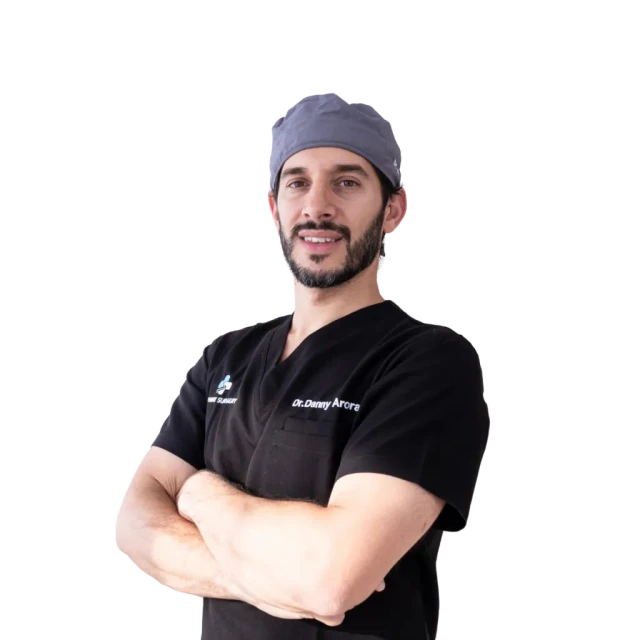
Our Achilles repair specialist.

Fellowship-trained surgeon expert in minimally invasive Achilles reconstruction.

FAQ

Frequently asked questions.

While traditional repairs often require 6 weeks of non-weight bearing, the PARS and SpeedBridge approach is designed for earlier weight-bearing. Many patients can begin protected weight-bearing in a specialized boot within 1 to 2 weeks, depending on the surgeon's guidance and specific repair strength.

While minimally invasive techniques aim to reduce infection risk and wound complications, all surgeries carry risks. These include potential sural nerve irritation, re-rupture, or deep vein thrombosis (DVT). Our surgeons utilize precise templates and jigs to minimize these risks.

Athletes typically return to light jogging around 3-4 months post-op, with full return to explosive sports occurring between 6 and 9 months. This timeline is heavily dependent on committing to a structured physical therapy protocol.

No referral is required. You can book an assessment directly with our team to discuss your injury and determine if the PARS system is right for you. We recommend bringing any recent imaging (Ultrasound or MRI) to your appointment.

Biomechanically, the PARS and SpeedBridge repairs are designed to be equivalent to or in some cases stronger than traditional open repairs. The key advantage is obtaining this strength while minimizing the surgical trauma to the local environment, which is intended to support superior healing.

The PARS technique utilizes a small horizontal incision (typically 2-3 cm), which generally heals with much less visible scarring than the 10-15 cm vertical incision required for traditional open repairs. This approach is designed to be more cosmetically appealing and less prone to wound healing issues.

Next step

Start your care journey.

If you have suffered an Achilles rupture, timing is critical — schedule a consultation to discuss your minimally invasive repair options. No referral required.

Related links

Continue your research.