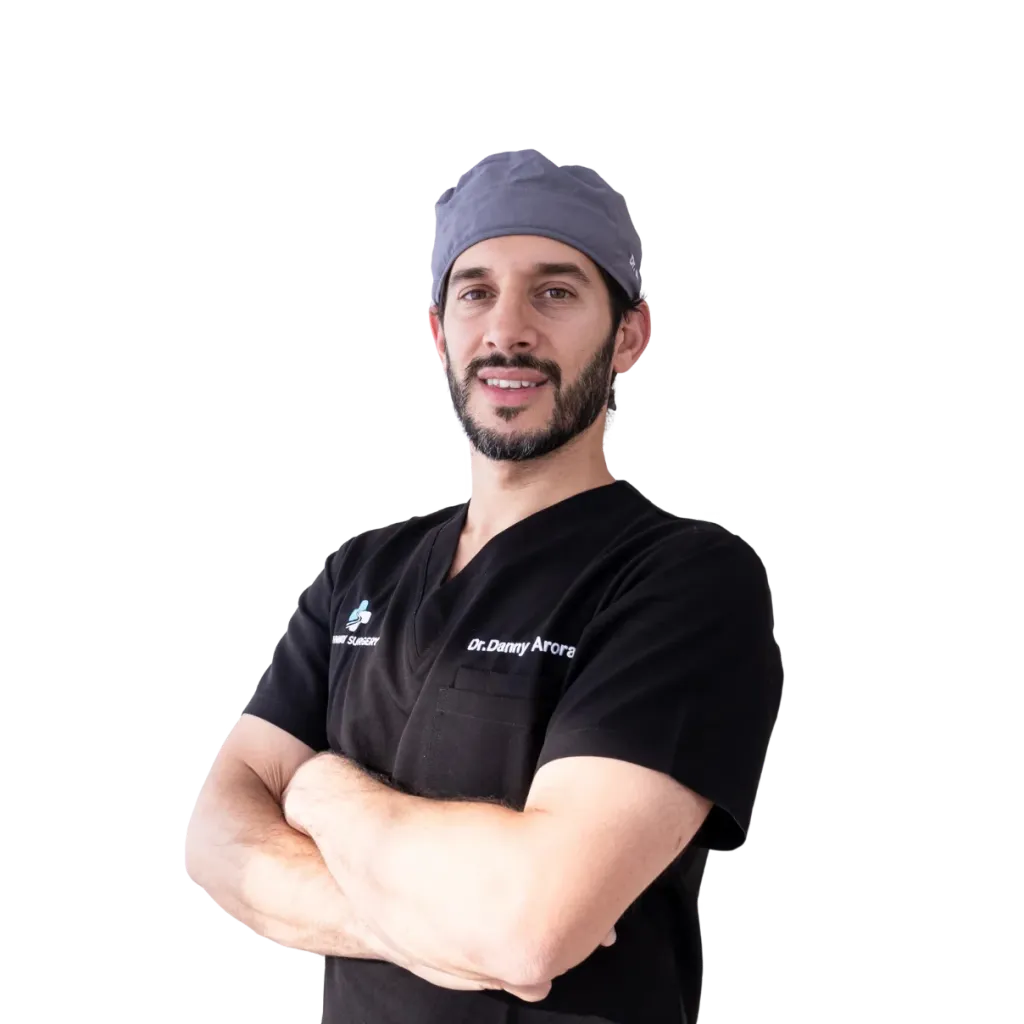
Foot and ankle surgeon Dr. Danny Arora covers bunion causes, minimally invasive correction, hammer toes, big toe arthritis, and when surgery is the right choice.
A lot of people come to the office thinking a bunion is a growth on the side of their big toe. That's actually a misconception. A bunion is not a growth—it's a deviation of the big toe where the toe turns and diverts closer to the second toe.
This creates a larger prominence on the inside of the foot, causing rubbing in footwear, pain, and swelling. People can't get into the shoes they want—whether narrow heels, sports shoes, skates, or ski boots.
Who is affected?
Bunions affect all comers—from juvenile patients to the elderly, athletes and non-athletes, active and inactive populations. The most common group is middle-aged women, but Dr. Arora sees it in kids, adolescents, men and women, boys and girls.
Causes & Non-Surgical Treatment
What causes bunions?
We used to think tight, narrow footwear was the main cause. That idea comes from centuries ago when people would cram kids' feet into tight shoes. But now we realize the biggest factor is heredity—it's genetic, often from the mother's or father's side.
Sometimes we don't even know why it happens—it just develops over time. Footwear is more of a thing of the past, though it can contribute to crowded toes.
Why do patients seek help?
Don't know what it is — they see a prominence and want to understand
Cosmetic reasons — don't like the look, can't get into narrow shoes
Pain — difficulty walking, performing work activities, or fitting into athletic footwear
Other foot pain — bunions can cause pain in other areas of the foot
Non-surgical management options
Surgery isn't always needed. Non-surgical approaches include:
Wide toe-box shoes — creates room so toes aren't rubbing
Toe spacers or sleeves — keeps toes straighter, decreases rubbing angle
Custom orthotics — neutralizes how the foot moves, offloads pressure
Important: Cosmetic reasons alone are usually not an indication for surgery—surgery comes with risks that must be weighed against benefits.
Minimally Invasive Bunion Surgery
What does bunion surgery do?
The goal is to realign the big toe—decrease the deviation angle so the toe is straight, eliminating the prominence. There are over 100 different types of bunion procedures, but the new wave is minimally invasive.
Key point: Every foot is different. We can't have tunnel vision—we have to assess standing posture, flat foot, high arch, hammer toes, and treat the whole foot so patients have a painless foot that functions properly.
Traditional vs. Minimally Invasive: The difference
Traditional open surgery (7 years ago):
Decent-size incision
Non-weight bearing for 6 weeks
Muscles get atrophied and weak
Longer recovery time
Minimally invasive (current approach):
Little poke holes—often no stitches needed
Walk on it right away—same day if desired
Decreased swelling and post-op pain
No big wound management
Recovery timeline
About 3 months, sometimes up to 6 months depending on risk factors for bone healing.
Dr. Arora: "The whole post-surgical bunion correction used to be a dreaded thing—bad stories, takes forever to heal, tons of pain, can't walk on it. I think that's the thing of the past. Now we get people on their feet faster with minimal pain, and patients are quite happy."
Hammer Toes & Associated Problems
What is a hammer toe?
A hammer toe is a deformity where the toe curls up due to tendons pulling the toe into a hook position. It can be:
Flexible — you can still straighten the toe
Fixed — the toe is stuck in that position
The longer a toe stays in a flexed position, the stiffer it becomes. The top knuckle (PIP joint) rubs on footwear, causing pain and pressure.
Transfer metatarsalgia: Pain from weight shifting
The big toe's deformity can cause transfer metatarsalgia—the patient stops putting weight on the bunion area and transfers weight to the other toes (2nd-5th toes), causing pain there.
Important: You can't just fix a hammer toe of the second toe without addressing the big toe that's curling into it. The whole foot must be treated together.
Big Toe Arthritis (First MTP Joint)
Can bunions lead to arthritis?
Yes. When the big toe is deviated, the joint isn't nicely centered and smooth—the articulation gets altered. This irregular joint can lead to more wear and eventually degenerative changes and arthritis.
Hallux rigidus is when you have pain at end range—the top of the joint wears off, extra bone forms, and the toe gets stiff.
Does running gait affect toe arthritis?
Forefoot strikers load the big toe area more, which can increase joint wear. Midfoot strikers get more midfoot load. But not everyone with arthritis on X-ray has pain—it varies by individual.
Non-surgical treatment for big toe arthritis
Custom orthotics — designed to offload the first MTP joint
Anti-inflammatories — oral medication or topical creams
Injections — cortisone, hyaluronic acid, or PRP (platelet-rich plasma)
Key point: None of these reverse arthritis. Once wear has settled in, it's there. The goal is to put a "speed bump" on further wear and offload the area. Relief can last 4-6 months, sometimes up to 10-12 months.
Cheilectomy & Fusion for Severe Arthritis
What is a cheilectomy?
A cheilectomy is a joint-sparing procedure for mild to moderate arthritis. We shave down the bone at the top of the big toe to create clearance so the joint can move more freely—it increases range of motion and takes away end-range pain.
Procedure details:
One little poke hole (minimally invasive)
15-20 minutes
Light sedation with local freezing
No stitches needed
Walk on it right away
2-4 weeks of swelling
When is fusion needed instead?
If arthritis is severe/advanced, cheilectomy won't help. You might have a straight toe but still a painful toe because the arthritis remains.
Fusion (arthrodesis) is the salvage procedure—you get rid of the joint, squeeze two bones together, the arthritis goes away, but you get a stiff big toe with no pain.
Trade-off example: A 40-year-old marathon runner with mild arthritis probably wants to keep running. A cheilectomy can help now; fusion can be done 10-15 years later if needed. But fusion changes how you run, so it's a bigger decision.
Fusion recovery: Non-weight bearing for 6 weeks, 3+ months to heal with plates and screws.
The controversy around orthotics
Some think orthotics are "hocus pocus," others are big advocates. Dr. Arora's stance: There's value in a well-fitted custom orthotic designed for a specific diagnosis—to correct something or offload an area.
What doesn't work as well: Going to get an over-the-counter arch support without a diagnosis. An orthotic needs direction—what are you trying to achieve?
Ready to Discuss Your Foot or Ankle Concern?
Book a consultation with Dr. Arora or one of our foot and ankle specialists. Virtual appointments available across Canada.