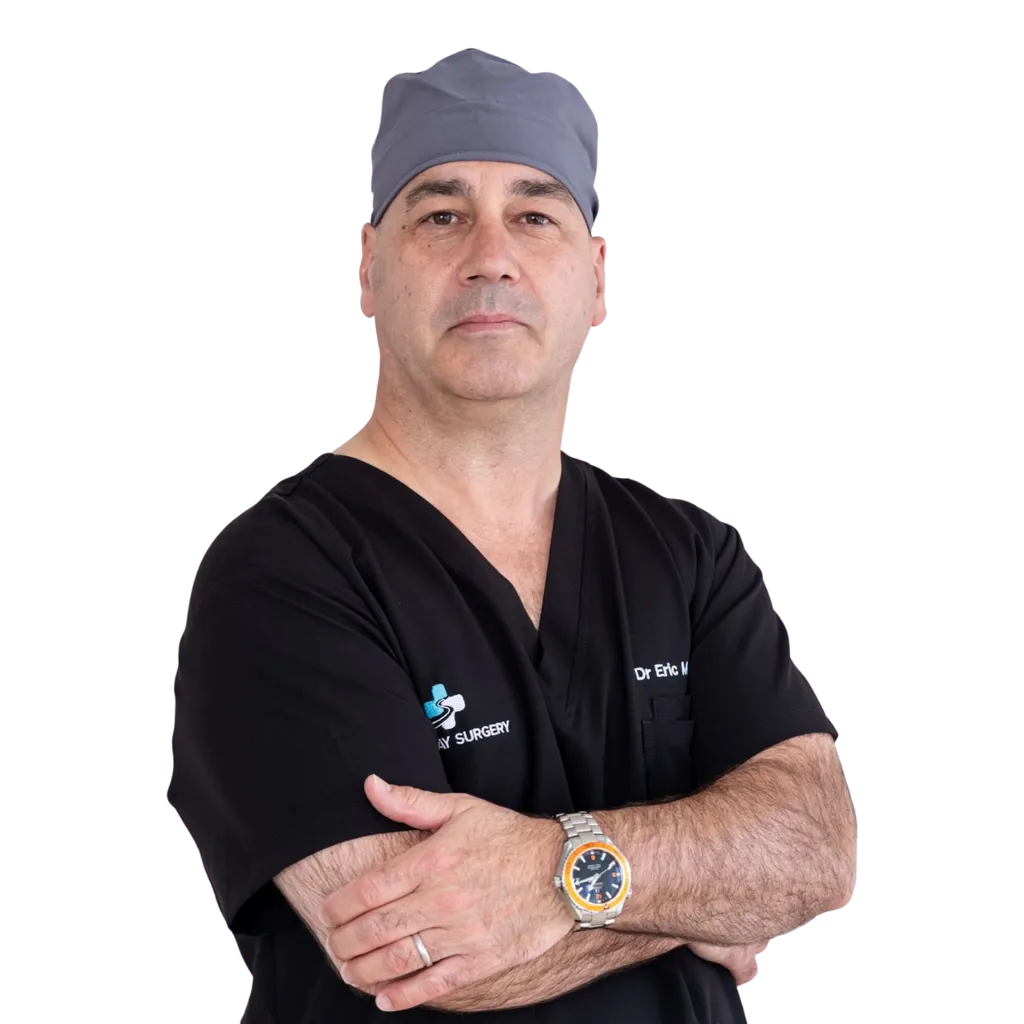
Your Spine Specialist
Fellowship-trained neurosurgeon with expertise in spinal fusion surgery
Spinal fusion surgery to address instability, deformity, and degenerative conditions using advanced Stryker instrumentation for secure fixation.
An instrumented spinal fusion is performed to stabilize the spine and relieve pain caused by instability, deformity, or degenerative conditions. The goal is to join two or more vertebrae together, eliminating motion at the painful segment.
Spinal instrumentation—screws and rods—is used to hold the vertebrae in proper alignment while the bone heals and fuses over time. These implants provide immediate stability and help maintain correct positioning during the fusion process.
Advanced fixation technology designed for long-term spinal stability
Pedicle Screw Systems
Secure fixation to the vertebral body
Titanium Rods
Connect screws to maintain alignment during healing
Long-Term Support
Designed to remain in the body to support the fused segment
Surgical Access
The surgeon accesses the affected area through an open or minimally invasive approach
Disc Treatment
The damaged disc or painful motion segment is addressed
Bone Graft Placement
Bone graft material is placed between the vertebrae to promote fusion
Instrumentation
Screws and rods are placed to hold vertebrae in proper alignment
Confirmation & Closure
Surgeon confirms proper alignment and stability before completing the surgery
Fellowship-trained neurosurgeon with expertise in spinal fusion surgery
Lumbar instrumented fusion is used to treat degenerative disc disease, spondylolisthesis (vertebra slippage), spinal instability, spinal deformity, and recurrent disc herniation. It may also be recommended after other decompression procedures when additional stability is needed.
Initial bone healing typically occurs over 3-6 months, though the fusion continues to mature for up to a year. During this time, the instrumentation (screws and rods) provides stability while the bone graft incorporates and the vertebrae fuse together.
A single-level fusion typically results in minimal loss of overall spine mobility—often unnoticeable in daily activities. Most patients find that pain relief allows them to be significantly more active than before surgery. Multi-level fusions may have a more noticeable impact on range of motion.
Most patients stay 1-3 nights in hospital. You'll be up and walking within 24 hours. Light activities can typically resume after 4-6 weeks. You should avoid heavy lifting, bending, and twisting during the initial healing phase. Physical therapy may be recommended to strengthen the core and improve posture.
No referral is required. You can book a consultation directly with our spine specialist to discuss your condition and determine if spinal fusion is appropriate. Having recent imaging (MRI, CT, or X-rays) is helpful but not mandatory.
Schedule a consultation to discuss your treatment options.