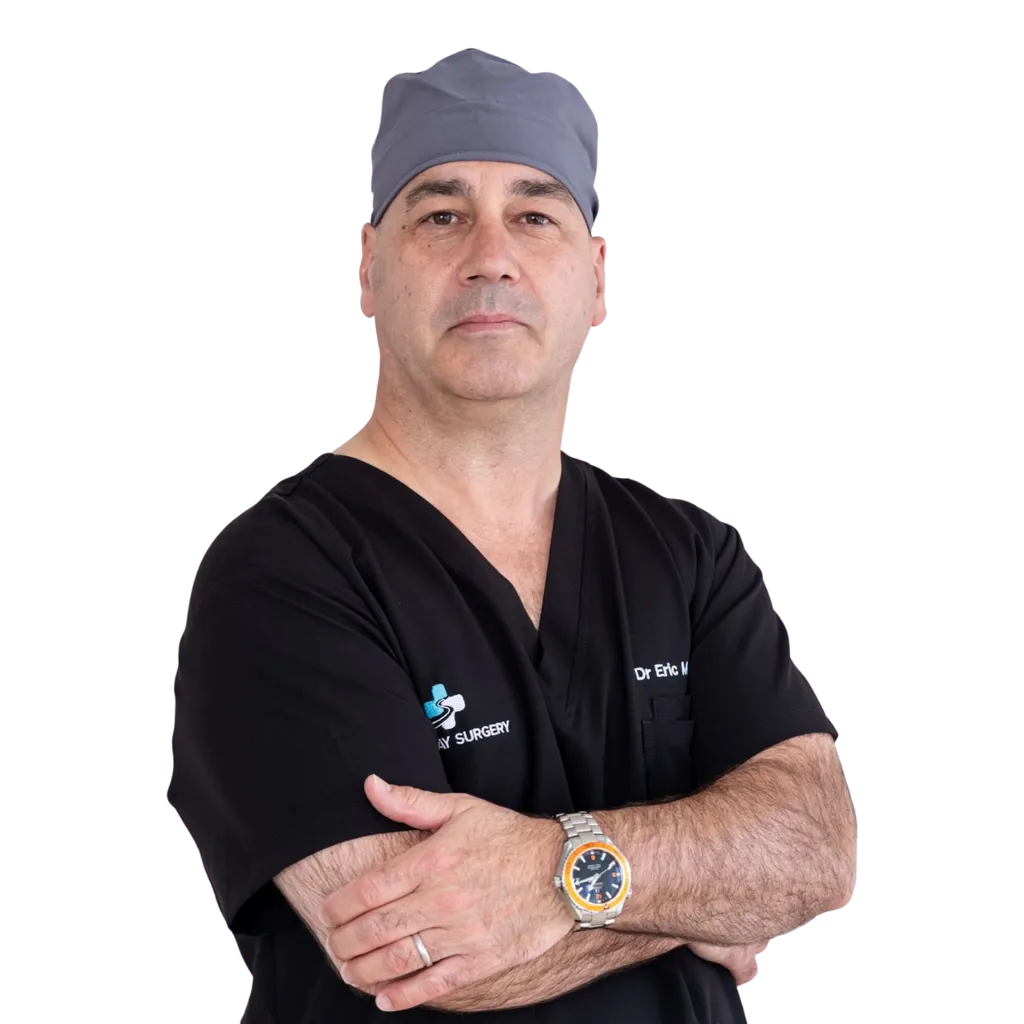
Your Spine Specialist
Fellowship-trained neurosurgeon specializing in minimally invasive spine surgery
Minimally invasive microdiscectomy removes the portion of a herniated disc pressing on the nerve—through smaller incisions, with less tissue disruption than traditional open surgery.
"The procedure—a micro spinal decompression to treat severe spinal stenosis causing significant back and leg pain—was a complete success. All symptoms were eliminated immediately following the surgery, which is a testament to Dr. Massicotte's expertise. Pathway Surgery took care of all logistical details, including limousine transportation and hotel accommodations."
— Ray Hindy
Micro Spinal Decompression
"I talked to Joseph from Pathway and he got the ball rolling by arranging a consultation with Dr. Massicotte. He did a minimally invasive lumber laminectomy on L4-5 causing severe pain in my leg. The surgery went well and I could walk with no pain. I highly recommend Pathway if you're in pain and don't want to keep popping pain killers!"
— Kevin Kraemer
Minimally Invasive Laminectomy
A discectomy is a surgical procedure that removes the portion of a herniated (ruptured) disc that is pressing on a spinal nerve. When a disc herniates, the soft inner material pushes through the outer layer and can compress nearby nerves, causing pain, numbness, or weakness that radiates into the leg (sciatica) or arm.
Minimally invasive microdiscectomy uses specialized instruments and techniques to perform this procedure through a small incision, typically 1-2 cm. This approach is designed to preserve muscle and tissue, reduce blood loss, minimize scarring, and enable faster return to daily activities.
High Success Rate: Microdiscectomy has been performed for decades and studies show approximately 85-90% of patients experience significant relief of leg or arm pain.
Dr. Massicotte's technique prioritizes rapid recovery and nerve protection
Much smaller than traditional open surgery
Surgical microscope for optimal visualization
Dilators separate rather than cut muscles
Most patients go home the same day
Through a small incision, Dr. Massicotte uses a tubular retractor system and surgical microscope to gently access the spine. A small portion of bone may be removed to visualize the nerve, then the herniated disc fragment compressing the nerve is carefully removed. The nerve is freed, and the incision is closed with just a few stitches. The procedure typically takes 45-60 minutes.
Fellowship-trained neurosurgeon specializing in minimally invasive spine surgery
Discectomy is primarily performed to treat herniated discs that are compressing spinal nerves, causing radiculopathy (pain radiating into the leg or arm). It's most commonly done for lumbar (lower back) disc herniations causing sciatica, but can also be performed in the cervical (neck) spine for arm pain symptoms.
Most patients go home the same day as surgery. You can typically walk within hours and return to desk work within 1-2 weeks. More physical activities usually resume in 4-6 weeks. Full recovery and return to all activities typically takes 6-8 weeks, though individual timelines vary based on your condition and occupation.
Microdiscectomy is a type of discectomy performed using a surgical microscope and minimally invasive techniques. The "micro" refers to the use of magnification and smaller incisions. Dr. Massicotte performs minimally invasive microdiscectomy, which offers faster recovery and less tissue disruption compared to traditional open discectomy.
There is approximately a 5-10% chance of the disc herniating again at the same level. This risk is similar whether the surgery is performed open or minimally invasive. Maintaining a healthy weight, good posture, and core strength can help reduce this risk. If re-herniation occurs, repeat surgery or fusion may be considered.
No referral is required. You can book a consultation directly with Dr. Massicotte. Bringing a recent MRI showing the disc herniation is very helpful for your consultation, but we can arrange imaging if needed.
Schedule a consultation to discuss whether minimally invasive discectomy could help relieve your herniated disc pain.