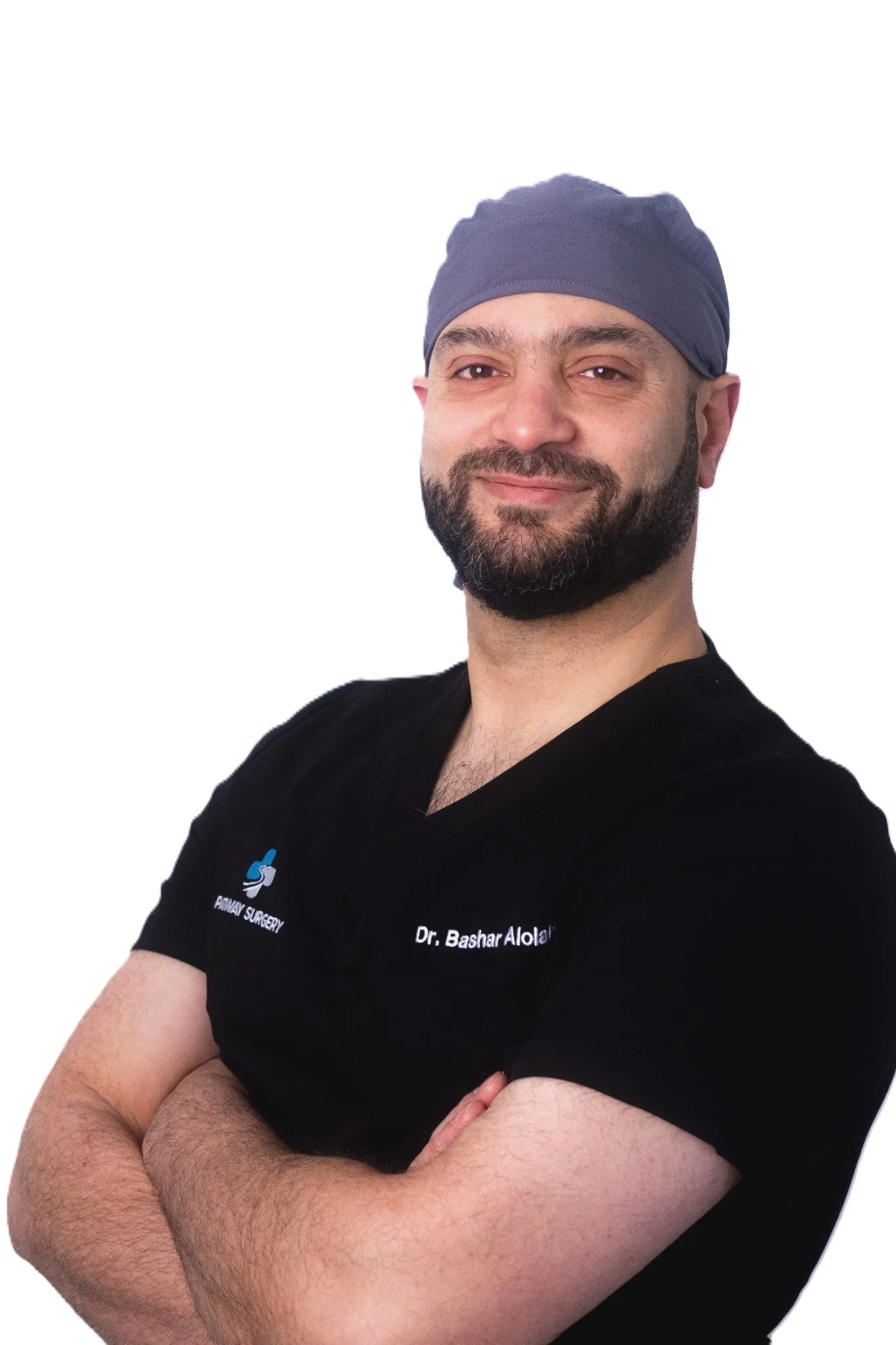
A bone block procedure for shoulder instability with glenoid bone loss, using J&J LATARJET instrumentation for precise, reproducible bone transfer.
"Absolutely thrilled with my experience with Dr. Dessouki and the Latarjet surgery I had. Surgery went smoothly and I feel confident in the recovery plan. What really stood out was how responsive he was post-op, every question I texted was answered promptly."
— Daniel Santelli
Latarjet Procedure
"I was a very complex shoulder case that many surgeons turned away. Dr. Alolabi took my shoulder on with no hesitation, explaining the surgery and risks well. Three days post-op I feel better than I did before surgery. Highly recommend."
— Steven King
Complex Shoulder Surgery
Recurrent shoulder dislocations can erode the bone of the glenoid (shoulder socket), making standard labral repairs less effective. The Latarjet procedure is designed for patients with significant glenoid bone loss or those who have failed prior stabilization surgery.
During the procedure, a piece of bone from the front of the shoulder blade (the coracoid process) is transferred to the front of the shoulder socket and fixed with screws. This bone graft increases the size of the socket, and the attached tendon (conjoint tendon) acts as a dynamic stabilizer when the arm is raised or rotated.
Purpose-built instrumentation for precise, reproducible bone block positioning
Standardized Technique
Purpose-designed guides for consistent graft preparation and positioning
Optimized Fixation
Specialized screws designed for secure bone block attachment
Bone + Tendon Effect
Increases socket size while conjoint tendon provides dynamic stability
High Success Rates
Well-established procedure with excellent clinical outcomes
Learn more at jnjmedtech.com
Incision & Access
A small incision is made at the front of the shoulder
Coracoid Harvest
A piece of bone from the shoulder blade (coracoid) with attached tendon is prepared
Glenoid Preparation
The front of the socket is prepared to receive the bone graft
Bone Block Transfer
The coracoid is transferred and fixed to the glenoid with screws
Stability Check
Shoulder stability and range of motion are confirmed
Sling
Protect bone healing
Motion
Restore range of motion
Strengthening
Progressive exercises
Return to Sport
With surgeon clearance
Schedule a consultation to discuss your treatment options.