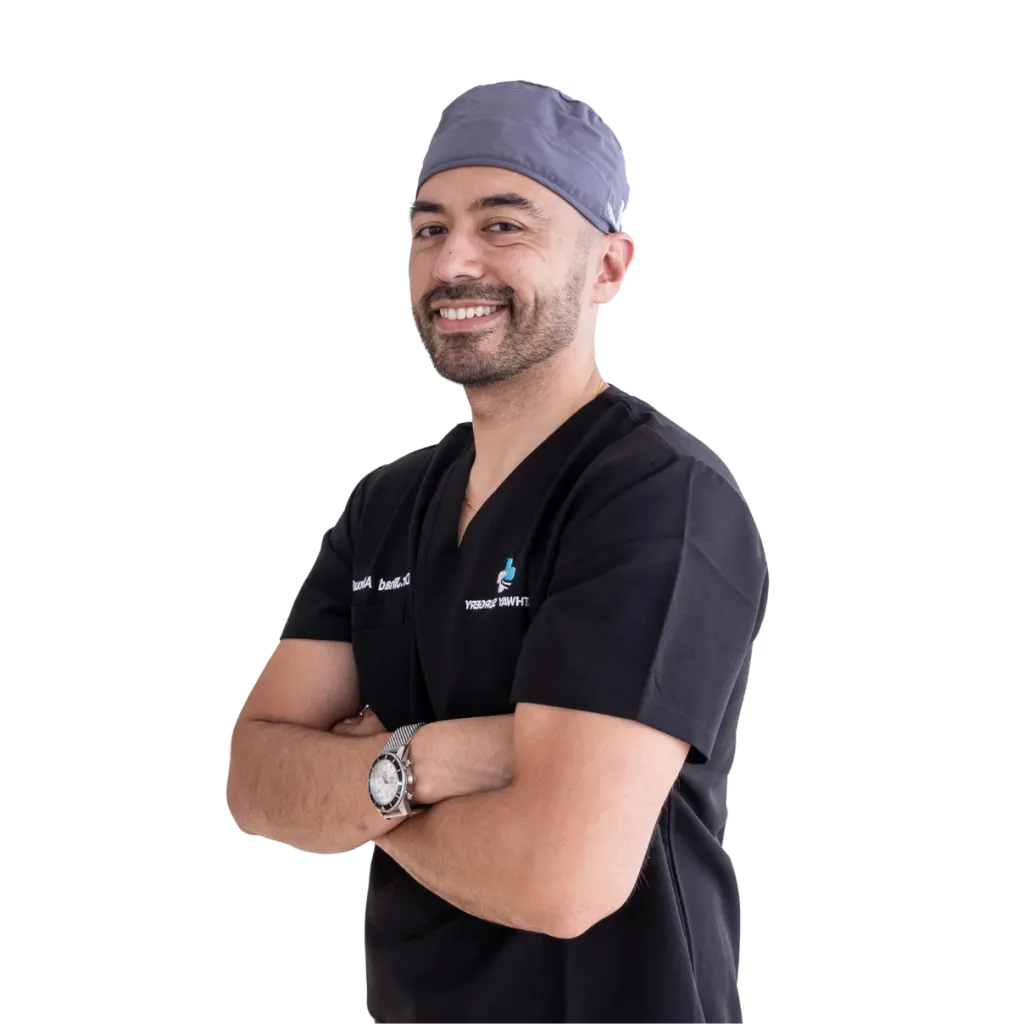
Your Knee Arthroscopy Specialists
Fellowship-trained sports medicine surgeons experienced in knee arthroscopy
Arthroscopic surgery to treat torn meniscus, removing damaged tissue using FLOW 50 Coblation technology for precise tissue removal with minimal thermal damage.
"My knee arthroscopy experience was perfect. Great attention to detail on testing, pre-surgical, and post-surgical care. Special call out to Dr. Abouali, just a really great person/surgeon and so much attention to my outcome. I will be skiing soon!"
— Michael Charbonneau
Knee Arthroscopy
"Pathway Surgery provides excellent and quick service. Dr. Abouali performed a successful knee arthroscopy for me in three weeks. If you have chronic pain and are waiting for surgery, I highly recommend Pathway Surgery."
— Anna Sokolowski
Knee Arthroscopy
"The knee arthroscopy procedure with Dr. Jihad Abouali exceeded expectations. They expedited the process, ensuring a swift surgery that would have taken months elsewhere. Overall, a stellar experience."
— Abdallah Elchanti
Knee Arthroscopy
The meniscus is a C-shaped piece of cartilage in your knee that acts as a shock absorber between your thighbone and shinbone. Each knee has two menisci. Tears can occur from twisting injuries, sports, or degenerative wear over time.
A meniscectomy is an arthroscopic procedure where a surgeon removes the damaged portion of the meniscus through small incisions. The goal is to remove unstable tissue that causes pain, catching, or locking while preserving as much healthy meniscus as possible.
Meniscectomy is one of the most commonly performed orthopedic procedures. It is typically performed as an outpatient surgery.
Watch our surgeons explain meniscus injuries, when surgery is needed, and what to expect during recovery.
Meniscus tears, meniscectomy vs. repair, and rehabilitation.
Explore Full Q&A GuideMeniscectomy may be considered when conservative treatments have not provided relief
Tears that cause mechanical symptoms such as locking, catching, or giving way.
Knee pain that has not improved with rest, physical therapy, or anti-inflammatory medications.
Difficulty with daily activities, walking, or participation in work or sports.
Age-related tears that cause ongoing symptoms despite non-surgical treatment.
Tears in areas of the meniscus with limited blood supply that are not suitable for repair.
Large tears that flip into the joint space and cause the knee to lock.
Meniscectomy is performed arthroscopically, meaning the surgeon uses a small camera and instruments inserted through 2-3 tiny incisions around the knee. This allows precise visualization and treatment of the damaged tissue.
Your surgeon will determine the best approach based on your tear:
Fellowship-trained sports medicine surgeons experienced in knee arthroscopy
What to expect following your procedure
Day 1
Walking with crutches or cane
Week 1
Walking short distances, desk work
Weeks 2-4
Strengthening and range of motion
Weeks 4-6
Gradual return to sports and exercise
Crutches
May be needed initially for comfort
Desk Work
When comfortable sitting
Physical Activities
Depending on progress
For certain tears—particularly those in the outer "red zone" with good blood supply—meniscal repair may preserve your natural meniscus and protect against future arthritis. Your surgeon will evaluate your MRI to determine if repair is possible.
Learn about Meniscal RepairMeniscectomy removes the damaged portion of the meniscus, while meniscus repair stitches the tear back together. Repair is typically preferred when the tear is in an area with good blood supply (the outer "red zone"), but many tears occur in areas that don't heal well and require partial removal.
The procedure typically takes 30 to 60 minutes. Most patients go home the same day, often within a few hours of arriving for surgery.
Crutches or a cane may be helpful for the first 1-2 weeks for comfort and stability. Most patients can put weight on the leg immediately after surgery, but walking may be uncomfortable initially due to swelling.
Return to sports typically occurs at 4-6 weeks, depending on your progress with physical therapy and the demands of your sport. Low-impact activities like swimming or cycling can often resume earlier than high-impact sports.
Meniscectomy is generally a low-risk procedure. Potential complications include infection, blood clots, stiffness, and persistent pain. Removing meniscus tissue may increase the long-term risk of knee arthritis, which is why surgeons aim to preserve as much healthy tissue as possible.
No referral is required. You can book a consultation directly. Having recent knee X-rays or MRI is helpful but not mandatory—we can arrange imaging if needed.
Schedule a consultation to discuss your knee symptoms and treatment options.