Hip Arthroscopy in Canada

Minimally invasive surgery for labral tears, FAI, and hip impingement using the postless supine technique with the Pink Hip Kit for enhanced patient safety.

★★★★★ 5.0 from 192+ Reviews

Real Hip Arthroscopy Patient Experiences

★★★★★

"I recently had a hip arthroscopy with Dr. Pauyo. In Ontario, I was told the wait would be 1 year for a surgeon within the public system. The experience from start to finish was nothing but exceptional. Dr. Pauyo is an incredible surgeon that was incredibly caring and kept my mind at ease."

— Eric Williams

Hip Arthroscopy

★★★★★

"I had two separate hip surgeries (FAI and labral tears) with this group, and both experiences exceeded my expectations. I felt respected throughout the process. With Pathway Surgery, I was able to get world-class care in a matter of days instead of years."

— Mathieu Lapointe

FAI & Labral Repair

★★★★★

"Dr. Pauyo did my hip labrum repair surgery about 3 weeks ago and he and his team made the process as smooth as possible. I was able to go in for surgery after only 4 weeks after my initial intake appointment—unheard of."

— Bethany Snider

Labral Repair

What is Hip Arthroscopy?

Hip arthroscopy is a minimally invasive surgical procedure used to diagnose and treat problems inside the hip joint, such as labral tears, cartilage damage, or femoroacetabular impingement (FAI).

The procedure is performed through small incisions using a camera called an arthroscope, which allows the surgeon to see inside the hip joint. Specialized instruments are then used to repair or remove damaged tissue, reshape bone if needed, and address the underlying cause of pain or restricted movement.

Throughout the surgery, the surgeon carefully assesses hip motion and joint stability to ensure smooth movement and proper function before completing the procedure.

Hip arthroscopy is a joint-preserving procedure—it's designed to repair and restore your natural hip, not replace it.

Surgeon Insights

Hear from Our Surgeons

Watch our hip specialists explain arthroscopy, labral tears, FAI, and when surgery is the right choice.

All Things Hip Surgery

Hip arthroscopy vs. replacement, labral tears, FAI, and the recovery process.

Explore Full Q&A Guide
Surgical Technique

Postless Supine Hip Arthroscopy

A safer, more comfortable approach using the Pink Hip Kit

The Pink Hip Kit is designed to support a postless supine technique for hip arthroscopy. Instead of using a traditional perineal post to achieve traction, this system allows the surgeon to safely distract the hip joint using patient positioning and specialized padding.

During the procedure, the patient is positioned supine on the operating table, and traction is applied without the use of a perineal post. This creates sufficient joint space for arthroscopic access while maintaining patient stability throughout the surgery.

Benefits of the Postless Technique

  • Avoids the perineal post, reducing risk of perineal, pudendal nerve, and soft-tissue complications
  • Improved patient comfort and safety by avoiding pressure in the groin area
  • Maintains optimal access for addressing labral tears, cartilage damage, or FAI
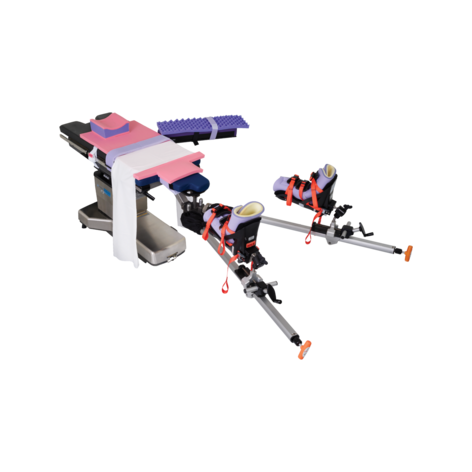
Pink Hip Kit Postless Hip Positioning System

Pink Hip Kit*

Specialized positioning system designed for postless supine hip arthroscopy, providing safe joint distraction without traditional post-related risks.

*Manufactured by Smith+Nephew

Q-FIX Knotless Anchor System

Q-FIX™ Knotless Anchors*

Advanced all-suture anchors designed specifically for hip labral repair, providing secure fixation without the need for knot tying.

*Part of the Pink Hip Kit system by Smith+Nephew

Implant Technology

Knotless Labral Repair

For labral tears, we use the Q-FIX Knotless anchor system—designed to provide reliable, low-profile fixation while simplifying the repair process.

  • Knotless design reduces procedure time and potential complications
  • All-suture anchor minimizes bone removal while maintaining strength
  • Low-profile fixation designed for the hip's unique anatomy
  • Secure labral reattachment to the acetabular rim

Conditions We Treat

Hip arthroscopy can address a variety of hip problems

Labral Tears

Repair or reconstruction of the hip labrum—the cartilage ring that cushions and stabilizes the hip socket.

FAI (Femoroacetabular Impingement)

Reshaping of bone spurs on the femoral head (cam) or acetabulum (pincer) to restore normal hip motion.

Cartilage Damage

Treatment of chondral lesions and early cartilage wear to slow progression of arthritis.

Loose Bodies

Removal of free-floating fragments of bone or cartilage that cause locking or catching.

Snapping Hip Syndrome

Release of tight tendons (iliopsoas or IT band) that cause painful snapping sensations.

Hip Synovitis

Removal of inflamed joint lining that causes pain and swelling.

The Procedure

Hip arthroscopy is performed under general or spinal anesthesia. Using the postless supine technique, the patient is positioned on the operating table and traction is applied through specialized padding rather than a traditional perineal post, creating sufficient joint space for arthroscopic access.

  • 2-3 small incisions (each about 1 cm)
  • 1-2 hours procedure time
  • Same-day discharge in most cases
  • Muscle-sparing approach with no cutting of muscles

What Can Be Done Arthroscopically

  • Labral repair or reconstruction
  • Bone reshaping (osteoplasty) for FAI
  • Cartilage microfracture or grafting
  • Removal of loose bodies
  • Iliopsoas tendon release
  • Synovectomy (removal of inflamed tissue)

Your Hip Arthroscopy Specialist

Fellowship-trained in hip preservation and sports medicine

Your Recovery Journey

What to expect after hip arthroscopy

Day 1

1

Home

Same-day discharge with crutches

Weeks 1-2

2

Protected Motion

Gentle range of motion exercises

Weeks 4-6

3

Strengthening

Progressive PT and reduced crutch use

Months 4-6

4

Return to Activity

Gradual return to sports

2–4 weeks

Off Crutches

Depending on procedure complexity

4–6 weeks

Daily Activities

Walking, driving, desk work

4–6 months

Return to Sports

Full activity clearance

Frequently Asked Questions

Ideal candidates are typically younger, active individuals with hip pain from labral tears, FAI, or mechanical symptoms who have not responded to conservative treatment. Patients with significant arthritis may be better suited for hip replacement. Your surgeon will evaluate your imaging and clinical picture to determine the best approach.

The postless technique avoids the use of a traditional perineal post to create traction during hip arthroscopy. Instead, specialized positioning and padding (the Pink Hip Kit) allows safe hip joint distraction while reducing the risk of perineal pressure injuries, pudendal nerve complications, and soft-tissue damage in the groin area.

The procedure typically takes 1 to 2 hours, depending on complexity. Simple procedures like loose body removal may be quicker, while labral repair with FAI correction takes longer. Most patients go home the same day.

Yes, most patients use crutches for 2-4 weeks after surgery. For labral repairs, limited weight bearing protects the healing tissue. Your surgeon will provide specific weight-bearing instructions based on your procedure.

Return to sports typically occurs at 4-6 months, depending on the procedure and your sport. Low-impact activities like swimming can often resume earlier. Your surgeon and physical therapist will guide you through a graduated return-to-sport protocol.

Hip arthroscopy has a low complication rate. Potential risks include temporary numbness from traction, stiffness, and very rarely nerve injury or infection. The postless technique further reduces risk of perineal and pudendal nerve complications. Choosing a high-volume hip arthroscopy surgeon significantly reduces risk. Your surgeon will discuss your individual risk profile.

No referral is required. You can book a consultation directly. Having recent hip X-rays or MRI is helpful but not mandatory—we can arrange imaging if needed.

Take the Next Step

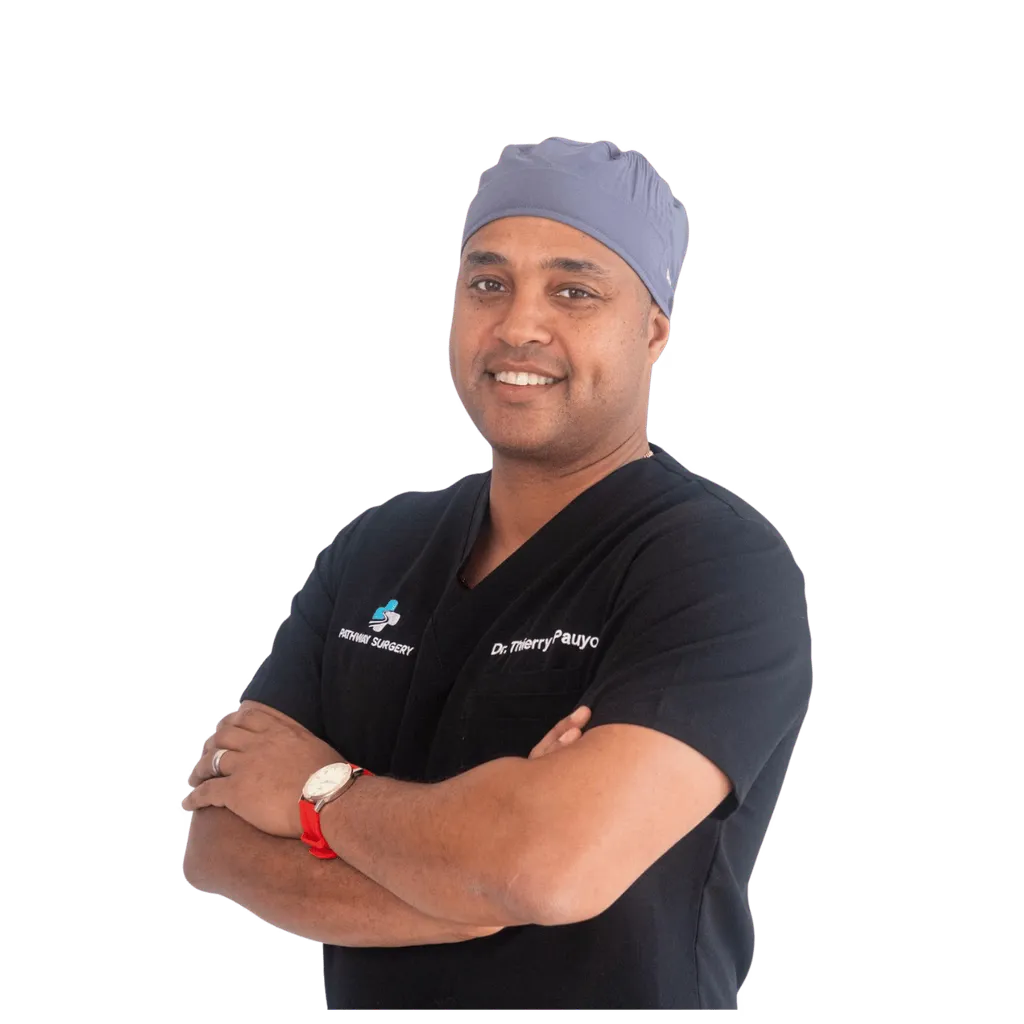
Schedule a consultation to discuss your hip symptoms and treatment options with Dr. Pauyo.