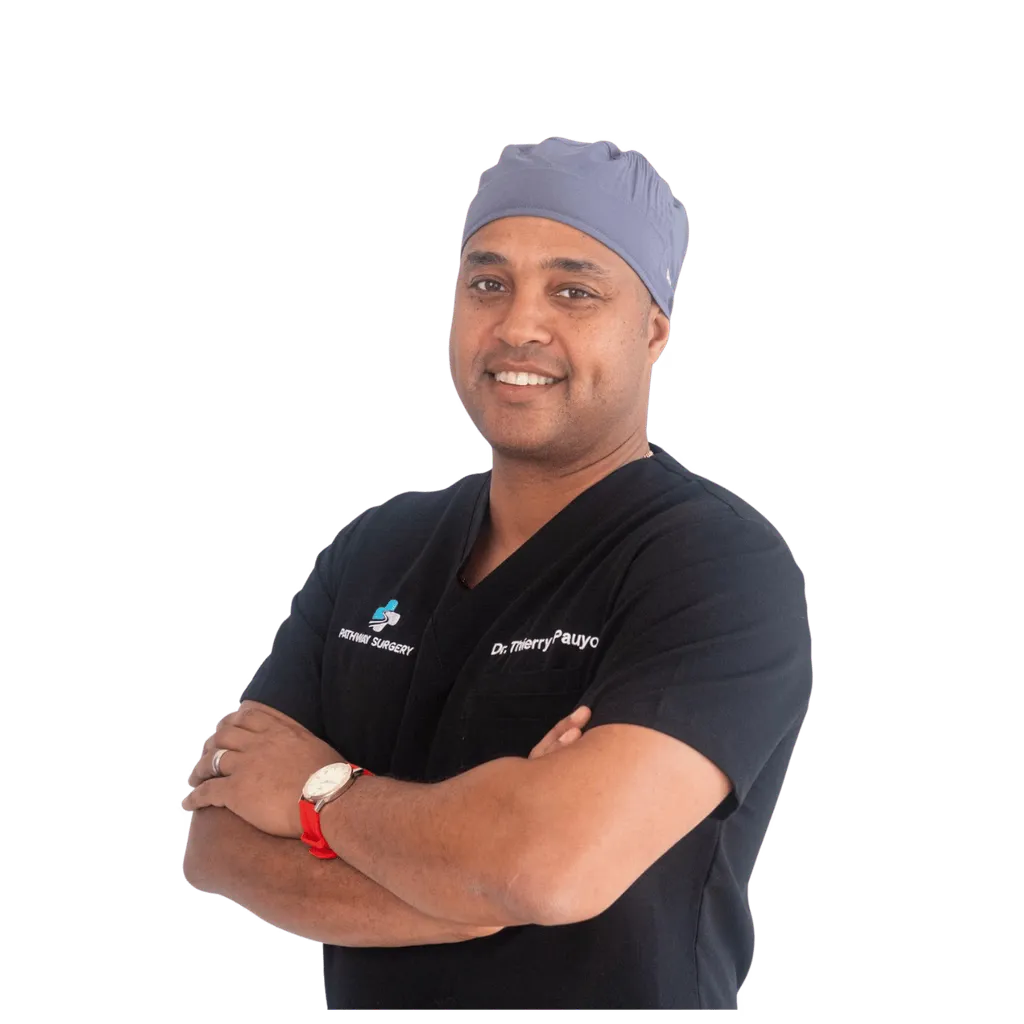
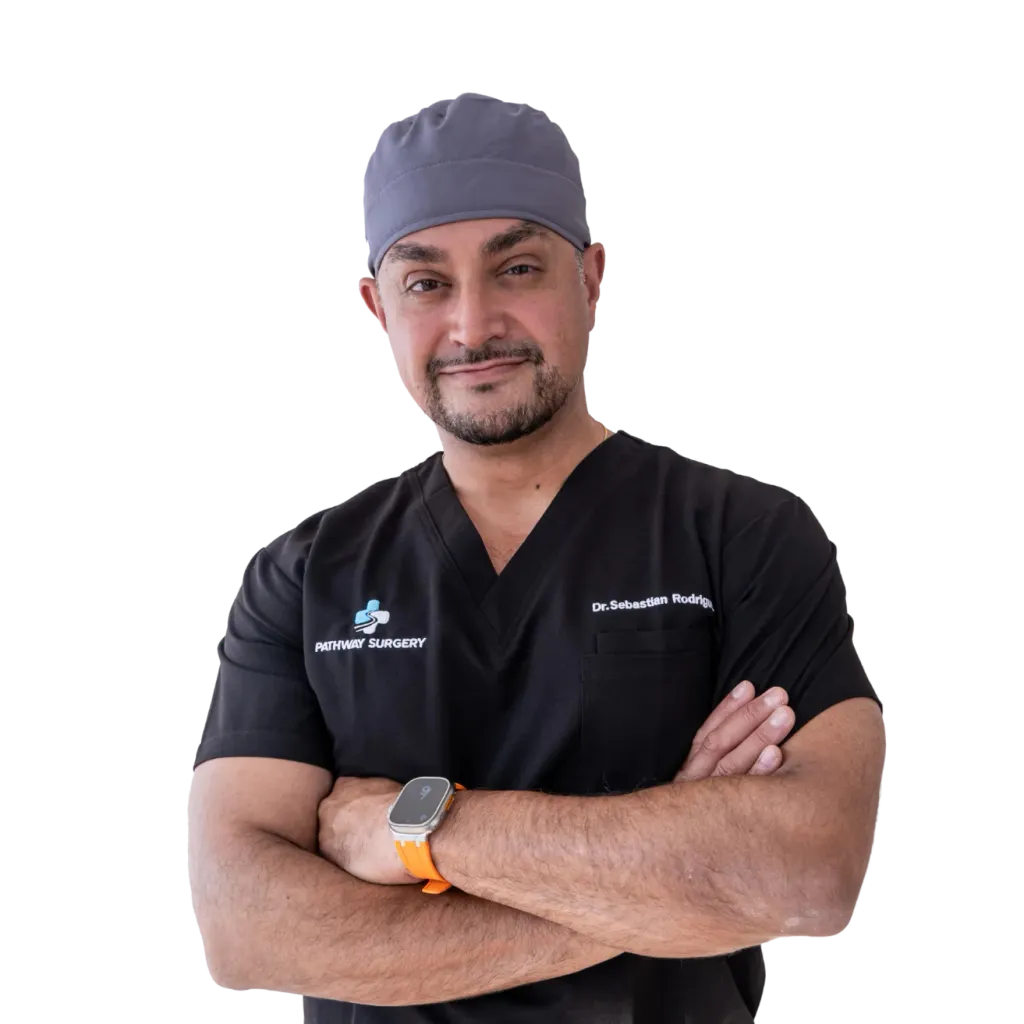
All Things Hip: Arthroscopy, Replacement & Resurfacing
Two top hip specialists cover hip anatomy, arthritis vs. non-arthritic pain, labral tears, hip arthroscopy, hip replacement, resurfacing, the direct anterior approach, and robotic surgery.
The hip is lined with cartilage which helps with gliding. If you're a baseball player, soccer player, or just running, a lot of power comes from the hip—it links the core to the lower extremities.
A healthy hip is one that doesn't hurt. You need strong musculature around it. If you have a pain generator in your hip—whether arthritis or other pathology—it affects how you walk and exercise, starting a chain of events that impacts your performance.
Where does hip pain come from?
Important: Many people say "hip pain" but actually point to their lower back or buttock—that's often a low back issue, not a hip problem.
True hip arthritis pain — classically in the groin, sometimes thigh or buttock
Inside the hip — labrum, cartilage, joint surfaces
Outside the hip — muscles, ligaments, tendons
Arthritic vs. Non-Arthritic Hip Pain
The key dichotomy
Dr. Pauyo: "I like to think about arthritic vs. non-arthritic pain. If someone has arthritis, they need to see Dr. Rodriguez. For me, it's everything that's not arthritis."
Dr. Rodriguez (arthroplasty): Hip replacement for end-stage arthritis Dr. Pauyo (preservation): Slowing or preventing arthritis onset
How to identify the pain source: The injection test
When symptoms aren't clear, we use diagnostic injections of lidocaine (anesthetic) directly into the hip joint. Think of it like the dentist freezing your gums.
Pain goes away → Pain generator is inside the hip (labrum, cartilage)
Pain doesn't go away → Pain comes from outside (muscles, tendons)
Key point: X-rays and MRIs tell you what you have, but treatment decisions are based on what symptoms you're experiencing. Having arthritis on imaging that doesn't hurt doesn't mean surgery.
Hip Arthroscopy & Labral Repair
What is hip arthroscopy?
A relatively new procedure (evolved over 20-25 years) where we use traction to access the hip and create space to look inside. We can address:
Labral tears
Focal cartilage problems
Capsular insufficiencies
Bony abnormalities (FAI/cam lesions)
Why the labrum matters
The labrum is the O-ring around the hip socket. When torn, the hip loses 10-20% of its stability. This creates pain and dysfunction.
Repair vs. debridement: Dr. Pauyo does 0% labral debridement. Studies show repair outcomes are far better because debridement doesn't restore stability—only repair reattaches the labrum to the socket.
Combined procedures: Bony work + repair
More than 90% of hip arthroscopies involve combined procedures with bony work. Often there's extra bone on the femur or socket that causes impingement and tears the labrum.
We remove what's causing the symptom (tear) AND the offending factor (extra bone) to prevent further damage.
Three factors for success
Good diagnosis — no arthritis, clear labral pathology
Good surgery
Good physiotherapy — this is NOT a surgery where you walk away and you're done
Age considerations
Results start declining after age 40 due to presence of arthritis. Dr. Pauyo operates on patients over 40, but pays very close attention to ensure no arthritis.
Caution: A generation of aggressive hip arthroscopy 5-10 years ago led to rapid degeneration in some patients—older patients with arthritis who were scoped when they shouldn't have been.
Can arthroscopy prevent arthritis?
Dr. Pauyo: "I want to be transparent—no one can say that if I do hip arthroscopy I will prevent you from having arthritis."
There's an association between labral tears, cam lesions, and arthritis over time. Some data suggests we can delay it. But to prove prevention would require unethical studies where we don't treat patients who need treatment.
Hip Replacement (Arthroplasty)
"The Operation of the Century"
Dr. Rodriguez: "If we look at all surgical procedures—gallbladder, brain surgery, eye surgery—number one for restoring quality of life, longevity, and efficacy is cataract surgery. Number two is hip replacement."
It's called the Operation of the Century because it's life-changing for patients.
How long do hip replacements last?
Old thinking: 7-10 years, only do it when you're in a wheelchair Current reality: 20-25 years expected, often lasting longer
Every time we've predicted lifespan, we've been wrong—they last longer than expected. And revision surgery (redo) is safe and effective with modern techniques.
The "too young" myth
Dr. Rodriguez: "The idea of being 'too young' based on what the surgeon decides is the wrong answer."
If you're in your 50s with pain and ready for surgery, grinding it out for 2-4 more years doesn't change future outcomes. That patient should understand they may need another surgery, but why suffer for years?
Pain affects sleep, mood, marriage, exercise—many areas of life. Some patients say they'd rather die than continue with the pain.
What happens during modern hip replacement
Incision: 3-6 inches (not as invasive as people think)
Acetabulum (socket): Ream out damaged cartilage, impact a metal cup, bone grows into it
Femur (thigh bone): Mill inside, impact a stem, bone grows into it
Add a liner (plastic/polyethylene) and head (ceramic/metal)
Direct Anterior Approach & Robotic Surgery
Why the anterior approach?
No muscles detached — goes through natural body planes
Less pain initially compared to lateral or posterior approaches
Lowest rate of dislocation
Faster recovery — walking 3-5 hours after surgery
Modern recovery timeline
Anesthesia: Low-dose spinal, no narcotics (less nausea), worn off within an hour Blood loss: Tranexamic acid reduced transfusion rates from 40% to less than 1% Walking: Same day, 3-5 hours post-surgery 80% recovered: By 6 weeks Cane/walker: 2-4 weeks typically
Dr. Rodriguez: "The minute you wake up, you will have less pain than you have right now. You'll feel like you have a bruise on your thigh, but that deep gnawing sharp pain will literally be gone."
Robotic surgery and navigation
Dr. Rodriguez on Robotics: "Navigation has made me a better surgeon. I can put things where I want to put them. We're trying to put prostheses that last 20-30 years—you want to be accurate to the millimeter and degree."
ROSA Hip enables more accurate reaming, easier cup impaction, and intraoperative AI-assisted templating.
Bilateral (both hips) surgery
For patients with disease in both hips, bilateral surgery in one session is safe with the anterior approach. Tranexamic acid has mitigated blood loss concerns.
The benefit: Instead of recovering from one hip and making your "good side" the operated one, you get a new lease on life for both.
Hip Resurfacing
What is hip resurfacing?
Instead of putting a stem into the femur, you put a cap on top. It's like a mixture between arthroplasty and joint preservation—resurfacing the top of the femur.
Benefits:
Less bone removal (preserves femoral bone stock)
Much bigger head = very hard to dislocate
Originally attractive for contact sports/high activity
Metal ion concerns
Metal-on-metal resurfacing was associated with metal ion issues in 2010-2012. The main culprit was actually metal-metal hip replacements (trunion corrosion), not true resurfacing.
Long-term monitoring hasn't linked elevated ions to cancer or major issues, but the perception has caused resurfacing to fall out of favor. Ceramic-on-ceramic resurfacing is now emerging.
Who is the ideal candidate?
Young patients with arthritis where you want something that could last 30-40 years. Dr. Rodriguez shares an example of a 16-year-old with post-traumatic arthritis (skeletal mature) who received resurfacing.
Important: You still need arthritis for resurfacing—it's not appropriate for labral tears or FAI without arthritis.
Cemented vs. cementless implants
Old thinking: Cement was vilified Reality: The problem was the plastic, not cement
Cement is excellent for weak bones (prevents fractures). In Europe, it's used more often. In North America, it's making a comeback. Typically used for patients 75-80+ or those with poor bone quality (e.g., on prednisone).
Top sports causing labral tears
Hockey — especially goalies (reverse VH movement puts tremendous stress on growing hips)
Soccer — lots of crouching and rotational forces
Mix of others — baseball pitchers (rotational power), gymnastics, fencing
Ballet: While many dancers come with tears, they're often naturally selected for hip range/flexibility. Many have undercoverage (dysplasia) which leads to arthritis. Their issues are often overuse and weak muscles that can be addressed with physiotherapy.
Prevention & prehab
Before surgery: Muscle bulk and mass is the #1 predictor of post-surgical outcomes. The more you work on soft tissues ahead of time, the better.
Dr. Pauyo on prevention: A lot more emphasis should be put on prevention. Their A2 Sports Medicine lab in Montreal uses 12-camera AI motion analysis to identify muscle imbalances.
Different providers serve different purposes: physiotherapists, athletic trainers, strength coaches, kinesiologists—all have different skill sets helpful at different stages.
Ready to Discuss Your Hip Concern?
Book a consultation with Dr. Pauyo (arthroscopy/preservation) or Dr. Rodriguez (replacement) to explore your options. Virtual appointments available across Canada.